

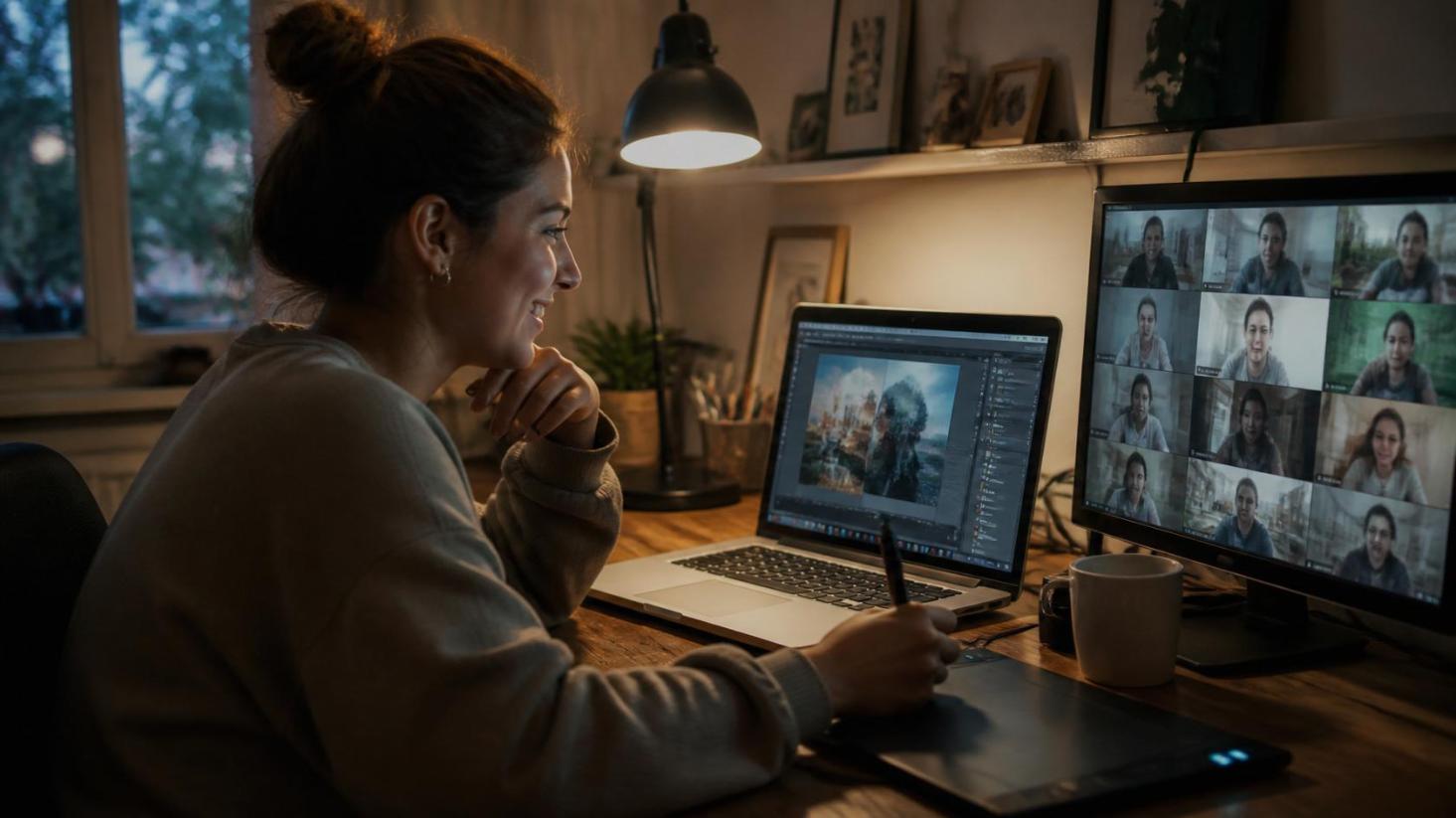
Once, a small group of beginner Photoshop students met in a voice channel instead of a traditional classroom. They came to watch their mentor move around layer masks on a shared screen. No one paid a single penny, no one was working toward a certificate, they just wanted to get better at editing photos.
Between the tutorials and the late-night troubleshooting sessions, the server quietly started filling up. If you’re a creator looking to increase your Discord server members, offering beginner-level Photoshop lessons may be one of the most undervalued moves available.
Design educators have known for years that tutorials grab attention, but fewer people understand that tutorials paired with a live community space do something YouTube videos simply cannot: they keep people around. A viewer who watches a five-minute tutorial on YouTube tends to forget most of it by the next morning.
But a viewer who joins a server, asks a question, and gets a real response from a real person? That person remembers both the lesson and the place where they learned it.
Marcus, a freelance retoucher who runs a small server for hobbyist editors, says his community grew almost by accident. After he posted some tips on how to fix skin tones without making people look like plastic mannequins, someone asked a follow-up question in the comments.
He told them, “Just join the server, I’ll show you.” A few thousand members later, most people who find the community do so either through a friend or by clicking a tutorial link that drops them right into the server.
“I never envisioned growing a following,” he said. “I just wanted a space to respond to inquiries without having to do so fifty times a day.”
Most Photoshop educators get that.
Teaching one-on-one through direct messages gets exhausting fast. A server fixes that by letting beginners post their work publicly, letting others chime in with feedback, and freeing the educator to act more like a moderator than a lecturer.
Why Beginners Specifically Drive Growth
Starting from the very beginning tends to pull in more engagement than teaching at an advanced level, and the reason is pretty simple: beginners ask a lot of questions. They post unfinished work, they tag friends, and they interact far more than advanced users who usually drop in, grab what they need, and leave.
A server built around beginner tutorials basically runs its own growth engine. Someone struggling with clipping masks finds a tutorial, joins the server to ask about it, and a week later is inviting a friend who is stuck on the exact same thing. It does not happen overnight, but the compounding effect is real.
One community manager compared it to running a permanent night class. “You’re not posting content,” she said. “You’re holding office hours, except your students are scattered across time zones and some show up at 2am.”
Structuring Tutorials for Community Growth
The servers that grow fastest tend to share a few things: tutorials broken into small, digestible chunks, room for questions during the lesson, and a closing prompt along the lines of “try this on your own photo and drop it in the feedback channel.”
That last part matters more than people realize. A tutorial that ends with an invitation to share work gives people a reason to come back and open the server again. It also creates a feedback loop where members post, receive critique, and start feeling genuinely attached to the space.
Some of the best-performing servers also run light competitions, like “before and after” edits or “everyone gets the same stock photo, let’s see what you do with it.” Those kinds of challenges get people posting and reacting, and a server with regular activity is one that people stick around in.
The Trust Factor
Photoshop has its own vocabulary, and that specificity actually makes trust easier to build. When a beginner watches a mentor work through a color correction without flinching, they register that this person knows what they are doing.
That credibility compounds. People return not just for the knowledge but because they trust the person sharing it, and trust in a niche community is genuinely hard to rebuild once it breaks.
This is likely why so many design educators resist locking content behind a paywall. The communities that tend to last are the ones giving away the foundational stuff for free while charging only for closer access, like coaching calls or direct feedback sessions.
The generosity is not just goodwill; it is what builds the audience in the first place.
A Community That Teaches Itself
At some point, the most successful servers outgrow their founder. Regular members start jumping in to answer beginner questions before the educator even sees them. The newer members get helped by people who were once in the exact same spot, which is a kind of mentorship that happens naturally and does not require anyone to plan it.
There is a real connection between learning Photoshop and growing an audience worth keeping, and for a lot of educators this has started to click. Some have even leaned into it deliberately, framing their content around the idea that you can boost your social media engagement by learning Photoshop alongside a community rather than in isolation, since the social layer is where the retention actually lives.
The tutorials on Photoshop get people through the door. What keeps them around is everything that comes after: the questions that get answered, the feedback that stings a little but helps, the small wins that other members actually celebrate.
Marcus summed it up pretty well. “I thought I was teaching the world to use the healing brush tool,” he said. “I never knew I was building a place to chill.”